Clun Castle
Clun Castle
Explore a dramatic medieval castle ruin set in the picturesque Shropshire countryside, perfect for families seeking outdoor history and adventure.
Opening Hours
Venue Details
Venue Type
Outdoor
Typical visit duration
1-3 hours
Booking
Walk-in
What this place offers
 Toilets
 Public transport nearby
 Baby changing facilities
 Pushchair friendly
Pricing
☕ Food & Drink
The Postcard Cafe
Google Reviews

Death Or Glory A.D
5 months agoA good place for a walk but as for the rest of the castle, there isn't much left...

Ellie
6 months agoOld ruins. Free access. Perfect for little walk around castle. Nice, quiet surroundings.

His Word
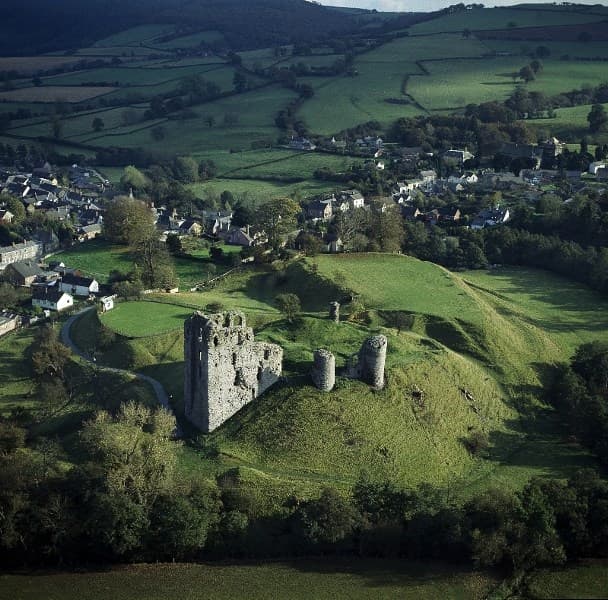
7 months ago(From English Heritage Site) Clun Castle sits high on a natural rocky mound in a loop of the river Clun, on the edge of the small, picturesque town of the same name. Founded shortly after the Norman Conquest to demonstrate the authority of the English monarchy over this part of the border region, the castle and the nearby settlement prospered in the 13th century thanks to the management of the Fitzalan family, but suffered a number of attacks from across the Welsh border. It was used as a hunting lodge in the 14th century, but was increasingly neglected, and by 1539 the castle was reported as ruinous. ORIGINS OF CLUN CASTLE The original motte-and-bailey castle here was built in the late 11th century. William the Conqueror (reigned 1066–87) granted lands to some of his followers to defend the Anglo-Welsh border, which remained unsettled for many years after the Conquest. These men became powerful marcher lords, ruling their lands independently of royal control. It was probably Picot de Say, who had been granted the estates of Clun and Stokesay, who built Clun Castle, high on a natural spur guarding the Clun valley. The castle became the centre of a vast lordship known as the barony of Clun. THE FITZALANS AT CLUN In 1155 the castle passed to William Fitzalan of Oswestry by his marriage to Isabella de Say, and it was owned by the powerful Fitzalan family for the next 400 years. They exercised almost unlimited authority over the barony, administering a mixture of Welsh and English law. Before the castle was built there was a small Saxon settlement at Clun, but in the 12th century a new town was laid out next to the castle with a grid of streets, containing regular ‘burgage plots’ or smallholdings. Under the Fitzalans, the castle suffered a number of attacks. In 1196 Rhys, prince of south Wales, captured the castle and burned it down. In 1215 John Fitzalan joined the rebellion against King John (r.1199–1216), who sent troops to attack the castle in retaliation. The castle withstood a later siege by Llewellyn of Wales in 1233. THE EARLS OF ARUNDEL In 1292 Richard Fitzalan succeeded to the title of Earl of Arundel and inherited large estates in Sussex. It is likely that he built the tower at Clun to reflect his powerful position. Shrewd investments and management of their Shropshire and Sussex estates brought the Fitzalan family great wealth and influence, making them one of the richest families in England. This was reflected in the wider settlement at Clun: by the mid-13th century it was a large, prosperous town, obtaining its wealth from the wool trade. By the mid-14th century the Fitzalans had moved their main residence to Arundel Castle in Sussex. Clun became the family’s country retreat, used largely as a hunting lodge, Nevertheless, it remained an important administrative centre – the Fitzalans continued to draw a great deal of money from their marcher estates, Clun among them, and it seems to have been kept in reasonable condition throughout the century. It was still secure in 1370, when money was being kept there. DECLINE In the early 15th century, however, followers of Owain Glyn Dwr, self-styled Prince of Wales, devastated the area around Clun, helping to bring an end to its prosperity. By 1539, the writer Leland reported that the castle was ruinous. Further decline in the town after the medieval period has meant that much of the medieval street system has been preserved.

Bryan Edwards
7 months agoBeautiful castle ruins with breathtaking views Clun Castle is a lovely place to visit. Parking is easy, with a small car park nearby, and from there it’s just a short walk up the hill to the ruins. The climb is gentle enough, though a bit uneven in places, and the views from the top are absolutely breathtaking — you can see right across the valley and the surrounding countryside. The site itself is peaceful and full of character, but it’s worth noting that it isn’t accessible for wheelchairs due to the hillside path and grassy slopes. If you’re able to make the walk, though, it’s a wonderful spot to explore and enjoy the scenery.

Jed Morgan
a year agoThe ruins of Clun castle are accessible on foot from the town near the bowling green. Maintenance work is being currently undertaken by English heritage so access is restricted. However you can still experience great views as you explore the site. Wear good footwear as the paths can be tricky. The town of Clun itself is set in beautiful countryside and well worth spending some time in the area
Reviews last updated: 29 September 2026
Events at this venue
No events currently scheduled
Visit Information
OFFICIAL WEBSITEOpening Hours
Events at Clun Castle
No upcoming events scheduled
Check back soon for new events at this venue.
This venue was last updated on 28 September 2026